|
|
Wave Chasers
Deep Flows Through the Samoan Passage
|
|
|
|
3rd & Final Cruise |
Instruments + Measurements |
Crush Cam |
Cultural Exchanges |
|
|
It’s just one of these incredibly special places in the ocean where you can measure the incoming properties of the fluid and measure the outgoing properties and there is really a big, measurable difference.
This Antarctic bottom water is of interest because it’s the main supply for deep water in the Pacific Ocean because there’s no deep water created anywhere in the North Pacific. All of the water in the North Pacific at the bottom has to have come through this pathway.
|
|
January – February 2014 'Processes' Cruise
|
|
Motivation & Experiment
|
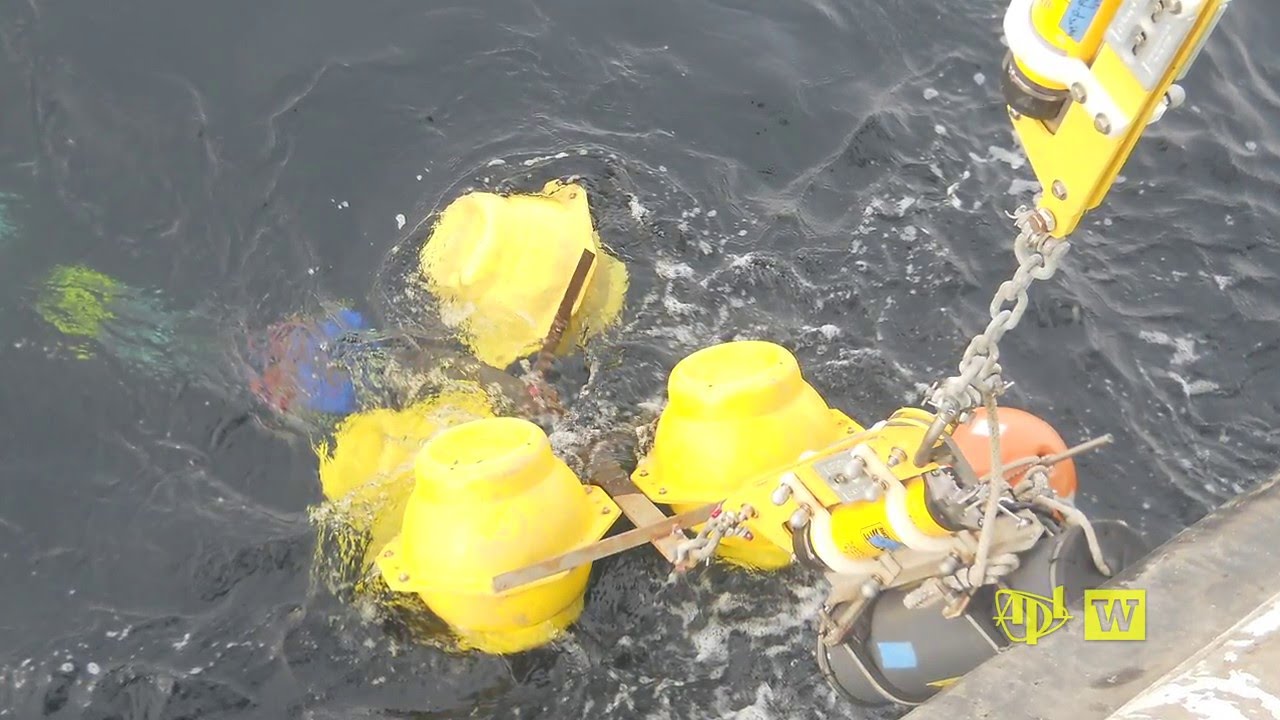
The Wave Chasers team went back for the third and final time to the Samoan Passage in early 2014. The first cruise in 2011 mapped the deep choke point separating the North and South Pacific oceans, and the next measured the flows that funnel through. Now they are recovering moorings that have been monitoring the flows for a year and using the ship's instruments to make detailed measurements of the turbulence.
|
Wave Chasers website
|
|
 |
|
Samoan Passage cruise blog
|
|
|
|
|
The Samoan Passage, 5500 m beneath the sea surface, is one of the "choke points" in the abyssal circulation. A veritable river of Antarctic Bottom water flows through it on its way into the North Pacific. As it enters the constriction, substantial turbulence, hydraulic processes, and internal waves must occur, which modify the water.
Because climate models do not do a good job of resolving flows like these, we will take our stable of instruments – moored profilers, conventional current meter moorings, and shipboard instruments – and measure the velocity, turbulence, and internal waves in the region. The overall goal is to understand these deep processes and the way they impact the flow, and to develop a strategy for eventually monitoring the flow through the Samoan Passage.
|
|
Experiment Sketch
|
The Samoan Passage Abyssal Mixing Experiment was three cruises over three years, each about 40 days long. During the first the seafloor was mapped as never before. On the second, the flow passages and pathways were mapped. We also deployed a long-term array of moorings that stayed in the water until the third cruise. On our final cruise to the region, the 'processes' cruise, we tried to measure in detail the incredible physics involved as the water flows through the passage.
We returned to the Samoan Passage for the third and final time to retrieve the long-term mooring array and to focus on the processes that are driving the turbulence and flow constrictions. We mapped the flow patterns around bumps in topography and over small sills as well as the turbulence response to those features. We are trying to capture as complete a picture as possible of the slightly denser fluids flowing under lighter fluids, causing mixing, and generating measurable responses in the flow. What we saw is a combination of internal waves that are generated by the flow and turbulence that is forced by the flow.
One of the challenges in this experiment is to take this basin scale property contrast and focus it down to a small region, about 200 km square. These flows are forced through small channels 20–50 km wide and we are also looking at responses to topographic features that are perhaps only 1–2 km in size.
|
|
Wave Chasers in the Media
|
 |
|
First siting of deep lee waves: Kaena RIdge, Hawaii EOS, Trans. Am. Geophys. Union, JoAnna Wendel Previous studies with remote observations and numerical models have predicted the existence of breaking deep internal lee waves driven by the tide, but until now, none have been observed directly. |
|
22 Apr 2014
|
|
|
|
|
Scientists say a deep canyon feeds Puget Sound King5 News (Seattle), Gary Chittim University of Washington researchers said they are astounded by the volume of deep sea water that is flowing through an underwater canyon at the mouth of the Strait of Juan de Fuca. |
|
14 Apr 2014
|
|
|
|
|
Samoan Passage cruise on the R/V Thompson UW News and Information, Hannah Hickey Oceanographers from the University of Washington's Applied Physics Laboratory are in Samoa for six weeks, the third and final trip studying skyscraper-sized waves that break in a narrow channel in the South Pacific Ocean. |
|
27 Jan 2014
|
|
|
|
|
Breaking Underwater Waves Cause Mixing in Deep Ocean NBC News, Charles Q. Choi The chaos from skyscraper-tall waves breaking deep underwater has been captured for the first time, researchers say. Turbulence from these waves can generate thousands of times more mixing in the deep ocean than previously thought and, in turn, potentially require a critical rethinking of global models of climate and the oceans, the scientists who got a look at the phenomenon added. |
|
17 Sep 2013
|
|
|
|
|
Dot Earth: Deep-ocean waves The New York Times, Andrew Revkin Scientists at the University of Washington have found skyscraper-height waves in deep ocean layers in the South Pacific — in some cases breaking in slow motion like surf on a beach. The finding sheds light on processes that allow heat in shallower ocean waters to mix with abyssal currents. |
|
11 Sep 2013
|
|
|
|
|
Breaking deep-sea waves reveal mechanism for global ocean mixing UW News & Information, Hannah Hickey A University of Washington study for the first time recorded wave breaking in a key bottleneck for circulation in the world%u2019s largest ocean — the Samoan Passage, a narrow channel in the South Pacific Ocean that funnels water flowing from Antarctica. |
|
9 Sep 2013
|
|
|
|
|
Tracking skyscraper-high waves across the globe OceanCurrents Magazine Internal-wave-driven mixing turns out to be a vital aspect of the ocean's circulation. We currently believe that without breaking internal waves, the deep sea would be a stagnant, homogenous deep pool of cold water with a very thin warm layer atop it. Since we instead observe a much more gradual decrease in temperature, we conclude that there is mixing in the abyss and that breaking internal waves lead to much of it. Therefore, internal wave mixing is part of the "bloodstream" of the ocean, enabling the upward part of the "conveyor belt" circulation by moving cold water upward. And that means that our predictions of climate change have significant uncertainty because we do not fully understand the sources, travel pathways and eventual breaking locations of the internal waves in the sea. |
|
14 Apr 2013
|
|
|
|
|
Wavechasers condemn gummy bears to crushing ocean depths UW Today, Sandra Hines Follow the serious science - and the development of novel "Will it crush?" segments inspired by the YouTube hit "Will it blend?" - as University of Washington Wavechasers work in the South Pacific near Samoa. The expedition Oct. 24 to Nov. 5 is led by the UW Applied Physics Laboratory's Matthew Alford, with scientists trying to learn more about waves as tall as skyscrapers that roll along unseen thousands of feet below the ocean surface. |
|
2 Nov 2011
|
|
|
|
|
Wave Chasers' Recent Publications
|
|
|
Flow and mixing in Juan de Fuca Canyon, Washington Alford, M.H., and P. MacCready, "Flow and mixing in Juan de Fuca Canyon, Washington," Geophys. Res. Lett., 41, 1608-1615, doi:10.1002/2013GL058967, 2014. |
|
More Info
| |
|
16 Mar 2014
|
|
|
|
|
We report breaking internal lee waves, strong mixing, and hydraulic control associated with wind-driven up-canyon flow in Juan de Fuca Canyon, Washington. Unlike the flow above the canyon rim, which shows a tidal modulation typical on continental shelves, the flow within the canyon is persistently up-canyon during our observations, with isopycnals tilted consistent with a geostrophic cross-canyon momentum balance. As the flow encounters a sill near the canyon entrance at the shelf break, it accelerates significantly and undergoes elevated mixing on the upstream and downstream sides of the sill. On the downstream side, a strong lee wave response is seen, with displacements of O(100 m) and overturns tens of meters high. The resulting diffusivity is O(10-2 m2 s-1), sufficient to substantially modify coastal water masses as they transit the canyon and enter the Salish Sea estuarine system.
|
|
|
|
Three dimensional double ridge internal tide resonance in Luzon Strait Buijsman, M.C., J.M. Klymak, S. Legg, M.H. Alford, D. Farmer, J.A. MacKinnon, J.D. Nash, J.-H. Park, A. Pickering, and H. Simmons, "Three dimensional double ridge internal tide resonance in Luzon Strait," J. Phys. Oceanogr., 44, 850-869, doi:10.1175/JPO-D-13-024.1, 2013. |
|
More Info
| |
|
1 Mar 2014
|
|
|
|
|
The three-dimensional (3D) double ridge internal tide interference in Luzon Strait in the South China Sea is examined by comparing 3D and 2D (two-dimensional) realistic simulations. Both the 3D simulations and observations indicate the presence of 3D first-mode (semi)diurnal standing waves in the 3.6 km deep trench in the Strait. As in an earlier 2D study, barotropic to baroclinic energy conversion, flux divergence, and dissipation are greatly enhanced when semidiurnal tides dominate relative to periods dominated by diurnal tides. The resonance in the 3D simulation is several times stronger than the 2D simulations for the central Strait. Idealized experiments indicate that, in addition to ridge height, the resonance is only a function of separation distance, and not of the along ridge length, i.e. the enhanced resonance in 3D is not caused by 3D standing waves or basin modes. Instead, the difference in resonance between the 2D and 3D simulations is attributed to the topographic blocking of the barotropic flow by the 3D ridges, affecting wave generation, and a more constructive phasing between the remotely generated internal waves, arriving under oblique angles, and the barotropic tide. Most of the resonance occurs for the first mode. The contribution of the higher modes is reduced because of 3D radiation, multiple generation sites, scattering, and a rapid decay in amplitude away from the ridge.
|
|
|
|
Three-dimensional double-ridge internal tide resonance in Luzon Strait Buijsman, M.C., J.M. Klymak, S. Legg, M.H. Alford, D. Farmer, J.A. Mackinnon, J.D. Nash, J.-H. Park, A. Pickering, and H. Simmons, "Three-dimensional double-ridge internal tide resonance in Luzon Strait," J. Phys. Oceanogr., 44, 850-869, doi:10.1175/JPO-D-13-024.1, 2014. |
|
More Info
| |
|
1 Mar 2014
|
|
|
|
|
The three-dimensional (3D) double-ridge internal tide interference in the Luzon Strait in the South China Sea is examined by comparing 3D and two-dimensional (2D) realistic simulations. Both the 3D simulations and observations indicate the presence of 3D first-mode (semi)diurnal standing waves in the 3.6-km-deep trench in the strait. As in an earlier 2D study, barotropic-to-baroclinic energy conversion, flux divergence, and dissipation are greatly enhanced when semidiurnal tides dominate relative to periods dominated by diurnal tides. The resonance in the 3D simulation is several times stronger than in the 2D simulations for the central strait. Idealized experiments indicate that, in addition to ridge height, the resonance is only a function of separation distance and not of the along-ridge length; that is, the enhanced resonance in 3D is not caused by 3D standing waves or basin modes. Instead, the difference in resonance between the 2D and 3D simulations is attributed to the topographic blocking of the barotropic flow by the 3D ridges, affecting wave generation, and a more constructive phasing between the remotely generated internal waves, arriving under oblique angles, and the barotropic tide. Most of the resonance occurs for the first mode. The contribution of the higher modes is reduced because of 3D radiation, multiple generation sites, scattering, and a rapid decay in amplitude away from the ridge.
|
|
|
|
Breaking internal lee waves at Kaena Ridge, Hawaii Alford, M.H., J.M. Klymak, and G.S. Carter, "Breaking internal lee waves at Kaena Ridge, Hawaii," Geophys. Res. Lett., 41, 906-912, doi:10.1002/2013GL059070, 2014. |
|
More Info
| |
|
16 Feb 2014
|
|
|
|
|
Shallow water oscillatory flows and deep ocean steady flows have both been observed to give rise to breaking internal lee waves downstream of steep seafloor obstacles. A recent theory also predicts the existence of high-mode oscillatory internal lee waves in deep water, but they have not previously been directly observed. Here we present repeated spatial transects of velocity, isopycnal displacement, and dissipation rate measured with towed instruments on the south flank of a supercritical ridge in Hawaii known as Kaena Ridge and compare them with predictions from a 3-D numerical model with realistic tidal forcing, bathymetry, and stratification. The measured and modeled flow and turbulence agree well in their spatial structure, time dependence, and magnitude, confirming the existence and predicted nature of high-mode internal lee waves. Turbulence estimated from Thorpe scales increases 2 orders of magnitude following downslope tidal flow, when the internal lee wave begins to propagate upslope and breaks.
|
|
|
|
Turbulent mixing and hydraulic control of abyssal water in the Samoan Passage Alford, M.H., J.B. Girton, G. Voet, G.S. Carter, J.B. Mickett, and J.M. Klymak, "Turbulent mixing and hydraulic control of abyssal water in the Samoan Passage," Geophys. Res. Lett., 40, 4668-4674, doi:10.1002/grl.50684, 2013. |
|
More Info
| |
|
16 Sep 2013
|
|
|
|
|
We report the first direct turbulence observations in the Samoan Passage (SP), a 40-km wide notch in the South Pacific bathymetry through which flows most of the water supplying the North Pacific abyssal circulation. The observed turbulence is 1000 to 10,000 times typical abyssal levels — strong enough to completely mix away the densest water entering the passage — confirming inferences from previous coarser temperature and salinity sections. Accompanying towed measurements of velocity and temperature with horizontal resolution of about 250 m indicate the dominant processes responsible for the turbulence. Specifically, the flow accelerates substantially at the primary sill within the passage, reaching speeds as great as 0.55 m s-1. A strong hydraulic response is seen, with layers first rising to clear the sill and then plunging hundreds of meters downward. Turbulence results from high shear at the interface above the densest fluid as it descends and from hydraulic jumps that form downstream of the sill. In addition to the primary sill, other locations along the multiple interconnected channels through the Samoan Passage also have an effect on the mixing of the dense water. In fact, quite different hydraulic responses and turbulence levels are observed at seafloor features separated laterally by a few kilometers, suggesting that abyssal mixing depends sensitively on bathymetric details on small scales.
|
|
|
|
Internal tidal energy fluxes in the South China Sea from density and velocity measurements by gliders Johnston, T.M.S., D.L. Rudnick. M.H. Alford, A. Pickering, and H.L. Simmons, "Internal tidal energy fluxes in the South China Sea from density and velocity measurements by gliders," J. Geophys. Res., 118, 3939-3949, doi:10.1002/jgrc.20311, 2013. |
|
More Info
| |
|
1 Aug 2013
|
|
|
|
|
Internal tidal energy fluxes were obtained from June 2011 to August 2011 using underwater gliders in the South China Sea. Spray gliders profiled every ~2 h to 500 m, which is deep enough given the shallow thermocline to compute mode-1 fluxes from vertical mode fits to tidal displacements and currents. Westward, mode-1 diurnal and semidiurnal fluxes exceeded 40 and 30 kW m-1. To our knowledge, these flux observations are the first from both velocity and density measurements by gliders. Fluxes compare well with a mooring near a generation site in southern Luzon Strait and a regional model. Furthermore, the zonal-depth structure of the internal tide is obtained by binning measurements, which cover four spring-neap cycles and over 100 km along 20°39'N. Westward phase propagation is found for currents and displacements, while roughly constant phase is found along beams. Both these features of the phase suggest a narrow-banded internal tide. Semidiurnal energy density is largest along a raypath which coincides with generation sites on both the eastern and western ridges in Luzon Strait. Diurnal energy density is surface-intensified consistent with relatively shallower diurnal raypaths emanating from the eastern ridge.
|
|
|
|
Observations of near-inertial internal gravity waves radiating from a frontal jet Alford, M.H., A.Y. Shcherbina, and M.C. Gregg, "Observations of near-inertial internal gravity waves radiating from a frontal jet," J. Phys. Oceanogr., 43, 1225-1239, doi:10.1175/JPO-D-12-0146.1, 2013. |
|
More Info
| |
|
1 Jun 2013
|
|
|
|
|
Shipboard ADCP and towed CTD measurements are presented of a near-inertial internal gravity wave radiating away from a zonal jet associated with the Subtropical Front in the North Pacific. Three-dimensional spatial surveys indicate persistent alternating shear layers sloping downward and equatorward from the front. As a result, depth-integrated ageostrophic shear increases sharply equatorward of the front. The layers have a vertical wavelength of about 250 m and a slope consistent with a wave of frequency 1.01 f. They extend at least 100 km south of the front. Time series confirm that the shear is associated with a downward-propagating near-inertial wave with frequency within 20% of f. A slab mixed layer model forced with shipboard and NCEP reanalysis winds suggests that wind forcing was too weak to generate the wave. Likewise, trapping of the near-inertial motions at the low-vorticity edge of the front can be ruled out because of the extension of the features well south of it. Instead, the authors suggest that the wave arises from an adjustment process of the frontal flow, which has a Rossby number about 0.2–0.3.
|
|
|
|
Internal bores and breaking internal tides on the Oregon continental slope Martini, K.I., M.H. Alford, E. Kunze, S.M. Kelly, and J.D. Nash, "Internal bores and breaking internal tides on the Oregon continental slope," J. Phys. Oceanogr., 43, 120-139, doi:10.1175/JPO-D-12-030.1, 2013. |
|
More Info
| |
|
1 Jan 2013
|
|
|
|
|
We present observations of breaking internal tides on the Oregon continental slope during a 40-day deployment of 5 moorings along 43° 12' N. Remotely-generated internal tides shoal onto the slope, steepen, break and form turbulent bores that propagate upslope independently of the internal tide. A high-resolution snapshot of a single bore is captured from LADCP/CTD profiles in a 25-hour time-series at 1200 m. The bore is cold, salty, over 100-m tall and has a turbulent head where instantaneous dissipation rates are enhanced and sediment is resuspended. At the two deepest slope moorings (1452 and 1780-m), similar bore-like phenomena are observed in near-bottom high-resolution temperature time series. Mean dissipation rates and diapycnal diffusivities increase by a factor of 2 when bores are present and observed internal tides are energetic enough to drive these enhanced dissipation rates. Globally, we estimate an average of 1.3 kW m-1 of internal tide energy flux is directed onto continental slopes. On the Oregon slope, internal tide fluxes are smaller suggesting it is a relatively weak internal tide sink. Mixing associated with the breaking of internal tides are therefore likely to be larger on other continental slopes.
|
|
|
|
Parametric subharmonic instability of the internal tide at 29°N MacKinnon, J.A., M.H. Alford, O. Sun, R. Pinkel, Z. Zhao, and J. Klymak, "Parametric subharmonic instability of the internal tide at 29°N," J. Phys. Oceanogr., 43, 17-28, doi:10.1175/JPO-D-11-0108.1, 2013. |
|
More Info
| |
|
1 Jan 2013
|
|
|
|
|
Observational evidence is presented for transfer of energy from the internal tide to near-inertial motions near 29°N in the Pacific Ocean. The transfer is accomplished via parametric subharmonic instability (PSI), which involves interaction between a primary wave (the internal tide in this case) and two smaller-scale waves of nearly half the frequency. The internal tide at this location is a complex superposition of a low-mode waves propagating north from Hawaii and higher-mode waves generated at local seamounts, making application of PSI theory challenging. Nevertheless, a statistically significant phase locking is documented between the internal tide and upward- and downward-propagating near-inertial waves. The phase between those three waves is consistent with that expected from PSI theory. Calculated energy transfer rates from the tide to near-inertial motions are modest, consistent with local dissipation rate estimates. The conclusion is that while PSI does befall the tide near a critical latitude of 29°N, it does not do so catastrophically.
|
|
|
|
Internal tides and mixing in a submarine canyon with time-varying stratification Zhao, Z., M.H. Alford, R.-C. Lien, M.C. Gregg, and G.S. Carter, "Internal tides and mixing in a submarine canyon with time-varying stratification," J. Phys. Oceanogr., 42, 2121-2142, doi:10.1175/JPO-D-12-045.1, 2012. |
|
More Info
| |
|
1 Dec 2012
|
|
|
|
|
The time variability of the energetics and turbulent dissipation of internal tides in the upper Monterey Submarine Canyon (MSC) is examined with three moored profilers and five ADCP moorings spanning February–April 2009. Highly resolved time series of velocity, energy, and energy flux are all dominated by the semidiurnal internal tide and show pronounced spring-neap cycles. However, the onset of springtime upwelling winds significantly alters the stratification during the record, causing the thermocline depth to shoal from about 100 to 40 m. The time-variable stratification must be accounted for because it significantly affects the energy, energy flux, the vertical modal structures, and the energy distribution among the modes. The internal tide changes from a partly horizontally standing wave to a more freely propagating wave when the thermocline shoals, suggesting more reflection from up canyon early in the observational record. Turbulence, computed from Thorpe scales, is greatest in the bottom 50–150 m and shows a spring-neap cycle. Depth-integrated dissipation is 3 times greater toward the end of the record, reaching 60 mW m-2 during the last spring tide. Dissipation near a submarine ridge is strongly tidally modulated, reaching 10-5 W kg-1 (10–15-m overturns) during spring tide and appears to be due to breaking lee waves. However, the phasing of the breaking is also affected by the changing stratification, occurring when isopycnals are deflected downward early in the record and upward toward the end.
|
|
|
|
An introduction to the special issue on internal waves St. Laurent, L., M.H. Alford, and T. Paluszkiewicz, "An introduction to the special issue on internal waves," Oceanography, 25, 15-19, doi:10.5670/oceanog.2012.37, 2012. |
|
More Info
| |
|
1 Jun 2012
|
|
|
|
|
This special issue of Oceanography presents a survey of recent work on internal waves in the ocean. The undersea analogue to the surface waves we see breaking on beaches, internal waves play an important role in transferring heat, energy, and momentum in the ocean. When they break, the turbulence they produce is a vital aspect of the ocean's meridional overturning circulation. Numerical circulation models must parameterize internal waves and their breaking because computers will likely never be powerful enough to simultaneously resolve climate and internal wave scales. The demonstrated sensitivity of these models to the magnitude and distribution of internal wave-driven mixing is the primary motivation for the study of oceanic internal waves. Because internal waves can travel far from their source regions to where they break, progress requires understanding not only their generation but also their propagation through the eddying ocean and the processes that eventually lead to their breaking. Additionally, in certain regions such as near coasts and near strong generation regions, internal waves can develop into sharp fronts wherein the thermocline dramatically shoals hundreds of meters in only a few minutes. These "nonlinear" internal waves can have horizontal currents of several knots (1 knot is roughly 2 meters per second), and are strong enough to significantly affect surface navigation of vessels. Vertical current anomalies often reach one knot as well, posing issues for subsurface navigation and engineering structures associated with offshore energy development. Finally, the upwelling and turbulent mixing supported by internal waves can be vital for transporting nutrient-rich fluid into coastal ecosystems such as coral reefs. Below, we provide a very brief introduction to some of the central concepts discussed in the 14 articles that make up the special issue section, and then put each of these articles in context.
|
|
|
|
Annual cycle and depth penetration of wind-generated near-inertial internal waves at Ocean Station Papa in the Northeast Pacific Alford, M.H., M.F. Cronin, and J.M. Klymak, "Annual cycle and depth penetration of wind-generated near-inertial internal waves at Ocean Station Papa in the Northeast Pacific," J. Phys. Oceanogr., 42, 889-909, doi:10.1175/JPO-D-11-092.1, 2012. |
|
More Info
| |
|
1 Jun 2012
|
|
|
|
|
The downward propagation of near-inertial internal waves following winter storms is examined in the context of a 2-yr record of velocity in the upper 800 m at Ocean Station Papa. The long time series allow accurate estimation of wave frequency, whereas the continuous data in depth allow separation into upward- and downward-propagating components. Near-inertial kinetic energy (KEin) dominates the record. At all measured depths, energy in downgoing motions exceeds that of upward-propagating motions by factors of 3–7, whereas KEin is elevated by a factor of 3–5 in winter relative to summer. The two successive winters are qualitatively similar but show important differences in timing and depth penetration. Energy is seen radiating downward in a finite number of wave groups, which are tagged and catalogued to determine the vertical group velocity cgz, which has a mean of about 1.5 x 10⁻⁴ m s-1 (13 m day-1). Case studies of three of these are presented in detail.
Downward energy flux is estimated as cgz x KEin (i) by summing over the set of events, (ii) from time series near the bottom of the record, and (iii) from the wavenumber–frequency spectrum and the dispersion relationship. These estimates are compared to the work done on near-inertial motions in the mixed layer by the wind, which is directly estimated from mixed layer near-inertial currents and winds measured from a surface buoy 10 km away. All three methods yield similar values, indicating that 12%–33% of the energy input into the mixed layer transits 800 m toward the deep sea. This simple picture neglects lateral energy flux carried by the first few vertical modes, which was not measured. The substantial deep penetration implies that near-inertial motions may play a role in mixing the deep ocean, but the strong observed variability calls for a need to better understand the role of lateral mesoscale structures in modulating the vertical propagation.
|
|
|
|
Internal waves on the Washington continental shelf Alford, M.H., J.B. Mickett, S. Zhang, P. MacCready, Z. Zhao, and J. Newton, "Internal waves on the Washington continental shelf," Oceanography, 25, 66-79, doi:10.5670/oceanog.2012.43, 2012. |
|
More Info
| |
|
1 Jun 2012
|
|
|
|
|
The low-frequency oceanography of the Washington continental shelf has been studied in great detail over the last several decades owing in part to its high productivity but relatively weak upwelling winds compared to other systems. Interestingly, though many internal wave-resolving measurements have been made, there have been no reports on the region's internal wave climate and the possible feedbacks between internal waves and lower-frequency processes. This paper reports observations over two summers obtained from a new observing system of two moorings and a glider on the Washington continental shelf, with a focus on internal waves and their relationships to lower-frequency currents, stratification, dissolved oxygen, and nutrient distributions. We observe a rich, variable internal wave field that appears to be modulated in part by a coastal jet and its response to the region's frequent wind reversals. The internal wave spectral level at intermediate frequencies is consistent with the model spectrum of Levine (2002) developed for continental shelves. Superimposed on this continuum are (1) a strong but highly temporally variable semidiurnal internal tide field and (2) an energetic field of high-frequency nonlinear internal waves (NLIWs). Mean semidiurnal energy flux is about 80 W m-1 to the north-northeast. The onshore direction of the flux and its lack of a strong spring/neap cycle suggest it is at least partly generated remotely. Nonlinear wave amplitudes reach 38 m in 100 m of water, making them among the strongest observed on continental shelves of similar depth. They often occur each 12.4 hours, clearly linking them to the tide. Like the internal tide energy flux, the NLIWs are also directed toward the north-northeast. However, their phasing is not constant with respect to either the baroclinic or barotropic currents, and their amplitude is uncorrelated with either internal-tide energy flux or barotropic tidal forcing, suggesting substantial modulation by the low-frequency currents and stratification.
|
|
|
|
Mapping low-mode internal tides from multisatellite altimetry Zhao, Z., M.H. Alford, and J.B. Girton, "Mapping low-mode internal tides from multisatellite altimetry," Oceanography, 25, 42-51, doi:10.5670/oceanog.2012.40, 2012. |
|
More Info
| |
|
1 Jun 2012
|
|
|
|
|
Low-mode internal tides propagate over thousands of kilometers from their generation sites, distributing tidal energy across the ocean basins. Though internal tides can have large vertical displacements (often tens of meters or more) in the ocean interior, they deflect the sea surface only by several centimeters. Because of the regularity of the tidal forcing, this small signal can be detected by state-of-the-art, repeat-track, high-precision satellite altimetry over nearly the entire world ocean. Making use of combined sea surface height measurements from multiple satellites (which together have denser ground tracks than any single mission), it is now possible to resolve the complex interference patterns created by multiple internal tides using an improved plane-wave fit technique. As examples, we present regional M2 internal tide fields around the Mariana Arc and the Hawaiian Ridge and in the North Pacific Ocean. The limitations and some perspective on the multisatellite altimetric methods are discussed.
|
|
|
|
Simulating the long-range swell of internal waves generated by ocean storms Simmons, H.L., and M.H. Alford, "Simulating the long-range swell of internal waves generated by ocean storms," Oceanography, 25, 30-41, doi: 10.5670/oceanog.2012.39, 2012. |
|
More Info
| |
|
1 Jun 2012
|
|
|
|
|
Near-inertial waves (NIWs) are a special class of internal gravity waves with periods set by planetary rotation and latitude (e.g., at 30° latitude, one cycle per 24 hours). They are notable because they contain most of the observed shear in the ocean and around half the kinetic energy. As such, they have been demonstrated to mix the upper ocean and to have the potential to mix the deep ocean enough to be important for climate simulations. NIWs are principally generated as a result of a resonant coupling between upper-ocean currents and mid-latitude atmospheric cyclones. Here, we report on simulated NIWs in an eddy-resolving general circulation model that is forced by a realistic atmosphere, and we make comparisons to NIWs observed from moored and shipboard measurements of currents. The picture that emerges is that as much as 16% of NIW energy (which is season dependent) radiates out of the mixed layer and equatorward in the form of low-mode, long-lived internal gravity waves; they transmit energy thousands of kilometers from their regions of generation. The large amount of energy in near-inertial motions at a given site is a combination of a local response to wind forcing and waves that have traveled far from where they were generated.
|
|
|
|
The direct breaking of internal waves at steep topography Klymak, J.M., S. Legg, M.H. Alford, M. Buijsman, R. Pinkel, J.D. Nash, "The direct breaking of internal waves at steep topography," Oceanography, 25, 150-159, doi: 10.5670/oceanog.2012.50, 2012. |
|
More Info
| |
|
1 Jun 2012
|
|
|
|
|
Internal waves are often observed to break close to the seafloor topography that generates them, or from which they scatter. This breaking is often spectacular, with turbulent structures observed hundreds of meters above the seafloor, and driving turbulence dissipations and mixing up to 10,000 times open-ocean levels. This article provides an overview of efforts to observe and understand this turbulence, and to parameterize it near steep "supercritical" topography (i.e., topography that is steeper than internal wave energy characteristics). Using numerical models, we demonstrate that arrested lee waves are an important turbulence-producing phenomenon. Analogous to hydraulic jumps in water flowing over an obstacle in a stream, these waves are formed and then break during each tidal cycle. Similar lee waves are also observed in the atmosphere and in shallow fjords, but in those cases, their wavelengths are of similar scale to the topography, whereas in the ocean, they are small compared to the water depth and obstacle size. The simulations indicate that these nonlinear lee waves propagate against the generating flow (usually the tide) and are arrested because they have the same phase speed as the oncoming flow. This characteristic allows estimation of their size a priori and, using a linear model of internal tide generation, computation of how much energy they trap and turn into turbulence. This approach yields an accurate parameterization of mixing in numerical models, and these models are being used to guide a new generation of observations.
|
|
|
|
Velocity structure of internal tide beams emanating from Kaena Ridge, Hawaii Pickering, A., and M.H. Alford, "Velocity structure of internal tide beams emanating from Kaena Ridge, Hawaii," J. Phys. Oceanogr., 42, 1039-1044, doi:10.1175/JPO-D-12-018.1, 2012. |
|
More Info
| |
|
1 Jun 2012
|
|
|
|
|
Observations are reported of the semidiurnal (M2) internal tide across Kaena Ridge, Hawaii. Horizontal velocity in the upper 1000–1500 m was measured during eleven ~240-km-long shipboard acoustic Doppler current profiler (ADCP) transects across the ridge, made over the course of several months. The M2 motions are isolated by means of harmonic analysis and compared to numerical simulations using the Princeton Ocean Model (POM). The depth coverage of the measurements is about 3 times greater than similar past studies, offering a substantially richer view of the internal tide beams. Sloping features are seen extending upward north and south from the ridge and then downward from the surface reflection about ±40 km from the ridge crest, closely matching theoretical M2 ray paths and the model predictions.
|
|
|
|
Observations of internal waves and parametric subharmonic instability in the Philippines archipelago Chinn, B.S., J.B. Girton, and M.H. Alford, "Observations of internal waves and parametric subharmonic instability in the Philippines archipelago," J. Geophys. Res., 117, doi:10.1029/2011JC007392, 2012. |
|
More Info
| |
|
12 May 2012
|
|
|
|
|
Internal waves contain a significant fraction of the kinetic energy in the ocean and are important intermediaries between the forcing (by wind and tide) and interior diapycnal mixing. We report here on measurements from Mindoro Strait in the Philippines (connecting the South China Sea to the Sulu Sea) of an internal wave field with a number of surprising properties that point to previously-unrecognized processes at work in the region. Continuum spectral levels are very close to typical "background" values found in the open ocean, but internal tide energy in both the diurnal and semidiurnal frequency bands is significantly elevated—and higher at the northern mooring (MP1) than the southern (MP2). Two particularly energetic depth ranges stand out at MP1: an upper layer centered near 300 m, and one at the bottom of the water column, near 1800 m. The upper layer contains both internal tides and a near-inertial band with upward and downward propagating waves and an apparent spring-neap cycle. The combination is suggestive of Parametric Subharmonic Instability as the forcing for the near-inertial band—a conclusion supported by bicoherence estimates. Mixing, estimated from density overturns, is weak over much of the water column but enhanced by about an order of magnitude in the deep layer and closely tied to the internal tide—both diurnal and semidiurnal. Near-inertial currents in this deep layer are dominantly rectilinear and not well-correlated with the mixing. Bulk mixing rates at the two sites are less than required to produce property changes seen in hydrography, suggesting additional enhancement elsewhere in the archipelago.
|
|
|
|
Internal wave measurements on the Cycladic Plateau of the Aegean Sea Alford, M.H., M.C. Gregg, V. Zervakis, and H. Kontoyiannis, "Internal wave measurements on the Cycladic Plateau of the Aegean Sea," J. Geophys. Res., 117, doi:10.1029/2011JC007488, 2012. |
|
More Info
| |
|
25 Jan 2012
|
|
|
|
|
The internal wave climate in the southern Aegean Sea is examined with an array of two bottom-mounted acoustic Doppler current profilers and three profiling moorings deployed on the northern continental slope of the Cretan Sea for 3 months. Frequency spectra indicate an extremely weak internal wave continuum, about 4–10 times weaker than the Garrett-Munk and Levine reference levels. Spectra are instead dominated by semidiurnal internal tides and near-inertial waves, which are examined in detail by bandpass filtering. In the semidiurnal band, a barotropic tidal flow of –2 cm s-1 is observed, with a pronounced spring/neap modulation in phase with the lunar fortnightly cycle. One to two days following several of these spring tide periods, a distinct internal tide featuring 10–20 m vertical displacements and 15–20 cm s-1 baroclinic velocities is detectable propagating upward and to the southeast. Time-mean energy increases a factor of 2–5 within about 100 m from the bottom, implying generation and/or scattering from the bottom, whose slope is nearly critical to semidiurnal internal waves over much of the array. Several strong, downward propagating near-inertial events are also seen, each of which occurs following a period of work done by the wind on the mixed layer as estimated from a nearby surface mooring. The high-frequency internal wave continuum is more temporally constant but increases substantially toward the end of the deployment. Significant but unexplained differences in kinetic energy occur between successive spring tide periods in the case of the internal tides and between successive wind events in the case of the near-inertial signals. Substantial variability is observed in the low-frequency flows, which likely contributes to the time variability of the internal wave signals.
|
|
|
|
Internal tides around the Hawaiian Ridge estimated from multisatellite altimetry Zhao, Z., M.H. Alford, J. Girton, T.M.S. Johnston, and G. Carter, "Internal tides around the Hawaiian Ridge estimated from multisatellite altimetry," J. Geophys. Res., 116, doi:10.1029/2011JC007045, 2011. |
|
More Info
| |
|
24 Dec 2011
|
|
|
|
|
Satellite altimetric sea surface height anomaly (SSHA) data from Geosat Follow-on (GFO) and European Remote Sensing (ERS), as well as TOPEX/Poseidon (T/P), are merged to estimate M2 internal tides around the Hawaiian Ridge, with higher spatial resolution than possible with single-satellite altimetry. The new estimates are compared with numerical model runs. Along-track analyses show that M2 internal tides can be resolved from both 8 years of GFO and 15.5 years of ERS SSHA data. Comparisons at crossover points reveal that the M2 estimates from T/P, GFO, and ERS agree well. Multisatellite altimetry improves spatial resolution due to its denser ground tracks. Thus M2 internal tides can be plane wave fitted in 120 km x 120 km regions, compared to previous single-satellite estimates in 4° lon x 3° lat or 250 km x 250 km regions. In such small fitting regions the weaker and smaller-scale mode 2 M2 internal tides can also be estimated.
The higher spatial resolution leads to a clearer view of the M2 internal tide field around the Hawaiian Ridge. Discrete generation sites and internal tidal beams are clearly distinguishable, and consistent with the numerical model runs. More importantly, multisatellite altimetry produces larger M2 internal tidal energy fluxes, which agree better with model results, than previous single-satellite estimates. This study confirms that previous altimetric underestimates are partly due to the more widely spaced ground tracks and consequently larger fitting region. Multisatellite altimetry largely overcomes this limitation.
|
|
|
|
From Luzon Strait to Dongsha Plateau: Stages in the life of an internal wave Farmer, D.M., M.H. Alford, R.-C. Lien, Y.J. Yang, M.-H. Chang, and Q. Li, "From Luzon Strait to Dongsha Plateau: Stages in the life of an internal wave," Oceanography 24, 64-77, doi:10.5670/oceanog.2011.95, 2011. |
|
More Info
| |
|
5 Dec 2011
|
|
|
|
|
Tidal currents in Luzon Strait south of Taiwan generate some of the largest internal waves anywhere in the ocean. Recent collaborative efforts between oceanographers from the United States and Taiwan explored the generation, evolution, and characteristics of these waves from their formation in the strait to their scattering and dissipation on Dongsha Plateau and the continental slope of mainland China. Nonlinear internal waves affect offshore engineering, navigation, biological productivity, and sediment resuspension. Observations within Luzon Strait identified exceptionally large vertical excursions of density (as expressed primarily in temperature profiles) and intense turbulence as tidal currents interact with submarine ridges. In the northern part of the strait, the ridge spacing is close to the internal semidiurnal tidal wavelength, allowing wave generation at both ridges to contribute to amplification of the internal tide. Westward radiation of semidiurnal internal tidal energy is predominant in the north, diurnal energy in the south. The competing effects of nonlinearity, which tends to steepen the stratification, and rotational dispersion, which tends to disperse energy into inertial waves, transform waves traveling across the deep basin of the South China Sea. Rotation inhibits steepening, especially for the internal diurnal tide, but despite the rotational effect, the semidiurnal tide steepens sufficiently so that nonhydrostatic effects become important, leading to the formation of a nonlinear internal wave train. As the waves encounter the continental slope and Dongsha Plateau, they slow down, steepen further, and are modified and scattered into extended wave trains. At this stage, the waves can "break," forming trapped cores. They have the potential to trap prey, which may account for their attraction to pilot whales, which are often seen following the waves as they advance toward the coast. Interesting problems remain to be explored and are the subjects of continuing investigations.
|
|
|
|
Observations of internal tides on the Oregon continental slope. Martini, K.I., M.H. Alford, and E. Kunze, "Observations of internal tides on the Oregon continental slope." J. Phys. Oceanogr., 41, 1772-1794, doi: 10.1175/2011JPO4581.1, 2011. |
|
More Info
| |
|
1 Jun 2011
|
|
|
|
|
A complex superposition of locally forced and shoaling remotely generated semidiurnal internal tides occurs on the Oregon continental slope. Presented here are observations from a zonal line of five profiling moorings deployed across the continental slope from 500 to 3000 m, a 24-h expendable current profiler (XCP) survey, and five 15-48-h lowered ADCP (LADCP)/CTD stations. The 40-day moored deployment spans three spring and two neap tides, during which the proportions of the locally and remotely forced internal tides vary. Baroclinic signals are strong throughout spring and neap tides, with 4-5-day-long bursts of strong cross-slope baroclinic semidiurnal velocity and vertical displacement . Energy fluxes exhibit complex spatial and temporal patterns throughout both tidal periods. During spring tides, local barotropic forcing is strongest and energy flux over the slope is predominantly offshore (westward). During neap tides, shoaling remotely generated internal tides dominate and energy flux is predominantly onshore (eastward). Shoaling internal tides do not exhibit a strong spring-neap cycle and are also observed during the first spring tide, indicating that they originate from multiple sources. The bulk of the remotely generated internal tide is hypothesized to be generated from south of the array (e.g., Mendocino Escarpment), because energy fluxes at the deep mooring 100 km offshore are always directed northward. However, fluxes on the slope suggest that the northbound internal tide is turned onshore, most likely by reflection from large-scale bathymetry. This is verified with a simple three-dimensional model of mode-1 internal tides propagating obliquely onto a near-critical slope, whose output conforms fairly well to observations, in spite of its simplicity.
|
|
|
|
The breaking and scattering of the internal tide on a continental slope. Klymak, J.M., M.H. Alford, R. Pinkel, R.-C. Lien, Y.J. Yang, and T.Y. Tang, "The breaking and scattering of the internal tide on a continental slope." J. Phys. Oceanogr., 41, 926-945, doi:10.1175/2010JPO4500.1, 2011. |
|
More Info
| |
|
1 May 2011
|
|
|
|
|
A strong internal tide is generated in the Luzon Strait that radiates westward to impact the continental shelf of the South China Sea. Mooring data in 1500-m depth on the continental slope show a fortnightly averaged incoming tidal flux of 12 kW m-1, and a mooring on a broad plateau on the slope finds a similar flux as an upper bound. Of this, 5.5 kW m-1 is in the diurnal tide and 3.5 kW m-1 is in the semidiurnal tide, with the remainder in higher-frequency motions. Turbulence dissipation may be as high as 3 kW m-1. Local generation is estimated from a linear model to be less than 1 kW m-1. The continental slope is supercritical with respect to the diurnal tide, implying that there may be significant back reflection into the basin. Comparing the low-mode energy of a horizontal standing wave at the mooring to the energy flux indicates that perhaps one-third of the incoming diurnal tidal energy is reflected. Conversely, the slope is subcritical with respect to the semidiurnal tide, and the observed reflection is very weak. A surprising observation is that, despite significant diurnal vertical-mode-2 incident energy flux, this energy did not reflect; most of the reflection was in mode 1.
The observations are consistent with a linear scattering model for supercritical topography. Large fractions of incoming energy can reflect depending on both the geometry of the shelfbreak and the phase between the modal components of the incoming flux. If the incident mode-1 and mode-2 waves are in phase at the shelf break, there is substantial transmission onto the shelf; if they are out of phase, there is almost 100% reflection. The observations of the diurnal tide at the site are consistent with the first case: weak reflection, with most of it in mode 1 and almost no reflection in mode 2. The sensitivity of the reflection on the phase between incident components significantly complicates the prediction of reflections from continental shelves.
Finally, a somewhat incidental observation is that the shape of the continental slope has large regions that are near critical to the dominant diurnal tide. This implicates the internal tide in shaping of the continental slope.
|
|
|
|
Internal wave climates of the Philippine Seas Girton, J.B., B.S. Chinn, and M.H. Alford, "Internal wave climates of the Philippine Seas," Oceanography, 24, 100-111, doi:10.5670/oceanog.2011.07, 2011. |
|
More Info
| |
|
1 Mar 2011
|
|
|
|
|
Internal wave measurements from moorings and profiling floats throughout the Philippine Archipelago, collected as part of the Office of Naval Research Philippine Straits Dynamics Experiment, reveal a wealth of subsurface processes, some of which have not been observed previously (in the Philippines or elsewhere). Complex bathymetry and spatially varying tide and wind forcing produce distinct internal wave environments within the network of seas and channels, ranging from quiescent interior basins to remotely forced straits. Internal tides in both the diurnal and semidiurnal bands dominate much of the velocity structure and are likely the dominant source of energy for mixing in the region. In addition, the transfer of energy from the internal tide directly to near-inertial motions through parametric subharmonic instability appears to be active and, rather than wind forcing, is the dominant source of near-inertial band energy.
|
|
|
|
Sustained, full-water-column observations of internal waves and mixing near Mendocino escarpment Alford, M.H., "Sustained, full-water-column observations of internal waves and mixing near Mendocino escarpment," J. Phys. Oceanogr., 40, 2643-2660, doi: 10.1175/2010JPO4502.1, 2010. |
|
More Info
| |
|
1 Dec 2010
|
|
|
|
|
The relative strength and spatiotemporal structure of near-inertial waves (NIW) and internal tides (IT) are examined in the context of recent moored observations made 19 km south of Mendocino Escarpment, an abrupt ridge/step feature in the eastern Pacific. In addition to strong internal tide generation, steps and ridges give rise to the possibility of "shadowing," wherein near-inertial energy is prevented from reaching depths beneath a characteristic intersecting the ridge top. A combination of two moored profilers and a long-range acoustic Doppler current profiler (ADCP) yielded velocity and shear measurements from 100 to 3640 m (60 m above bottom) and isopycnal depth, strain, and overturn-inferred turbulence dissipation rate from 1000 to 3640 m. Sampling intervals (20 min in the upper 1000 m and 1.5 h below that) were fast enough to minimize aliasing of higher-frequency internal-wave motions. The 67-day-long record is easily sufficient to isolate NIW and IT via bandpass filtering and to capture low-frequency variability in all quantities.
No near-inertial shadowing was observed. Instead, energetic near-inertial waves were observed at all depths, radiating both upward and downward. A strong upward internal tide beam, showing a pronounced spring–neap cycle, was also seen near the expected depth. Case studies of each of these are presented in depth and isopycnal-following coordinates. Except for immediately above the bottom and in the "beam," where IT kinetic energy shows marked peaks, kinetic energy in the two bands is within a factor of 2 of each other. However, because of the redder NIW vertical wavenumber spectrum, NIW shear exceeded IT shear at all depths by a factor of 2–4. Dissipation rate was strongly enhanced in the bottom 1000 m and in the depth range of the internal tide beam. However, except for very near the bottom and possibly in one NIW event, no clear phase relationship was observed between dissipation rate and wave shear or strain, suggesting that turbulence occurs through a cascade process rather than by direct breaking at most locations.
|
|
|
|


 Read Transcript